Health insurance terms can get confusing fast—especially when comparing Medicare vs Medicaid. While both are government-sponsored health programs, they serve very different purposes and populations. Understanding how each works can help you or your loved ones avoid coverage gaps, unexpected costs, and enrollment mistakes.
If you’ve ever wondered which program you qualify for—or how they differ—this guide explains it all in simple, clear language.
What Is Medicare?
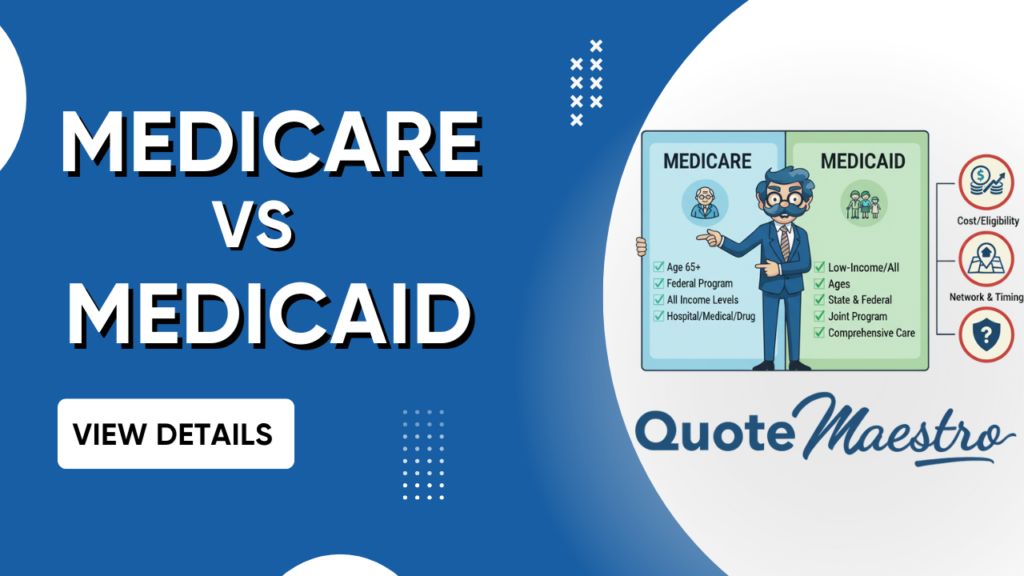
Medicare is a federal health insurance program primarily designed for older adults and certain individuals with disabilities. It provides nationwide coverage and follows the same basic rules across all states.
Who Medicare Is For
Medicare typically covers:
-
Adults aged 65 and older
-
People under 65 with qualifying disabilities
-
Individuals with ALS or end-stage renal disease
Eligibility is based on age or medical condition, not income.
Parts of Medicare Explained
-
Part A: Hospital insurance
-
Part B: Medical insurance (doctor visits and outpatient care)
-
Part C (Medicare Advantage): Private plans that bundle Parts A and B
-
Part D: Prescription drug coverage
Many beneficiaries also choose Medigap plans to help cover out-of-pocket costs.

What Is Medicaid?
Medicaid is a joint federal and state program that provides health coverage for people with limited income and resources. Unlike Medicare, Medicaid eligibility and benefits can vary by state.
Who Medicaid Is For
Medicaid is designed for:
-
Low-income adults and families
-
Children and pregnant women
-
Seniors with limited income
-
Individuals with disabilities
Eligibility is primarily based on income level, household size, and state guidelines.
Key Features of Medicaid
-
Low or no monthly premiums
-
Minimal out-of-pocket costs
-
Coverage for essential health services
-
Long-term care and nursing home coverage (in many cases)
Medicaid plays a critical role in providing access to healthcare for vulnerable populations.

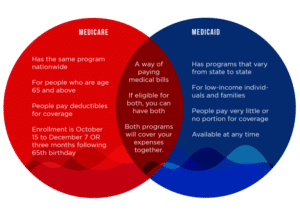
Medicare vs Medicaid: Key Differences Explained
Understanding Medicare vs Medicaid comes down to eligibility, cost, and how each program is managed.
Eligibility
-
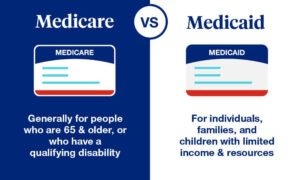
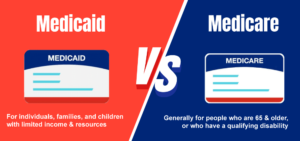
Medicare: Based on age or disability
-
Medicaid: Based on income and financial need
Cost
-
Medicare: May include premiums, deductibles, and copays
-
Medicaid: Often free or very low cost
Administration
-
Medicare: Federally administered, consistent nationwide
-
Medicaid: Joint federal and state program, varies by state
Coverage Scope
-
Medicare: Focuses on medical and hospital care
-
Medicaid: Includes broader services, including long-term care
Can You Have Medicare and Medicaid at the Same Time?
Yes. Some individuals qualify for both programs—this is known as dual eligibility.
Dual-eligible individuals may receive:
-
Medicare as primary coverage
-
Medicaid assistance with premiums and cost-sharing
-
Expanded benefits not covered by Medicare alone
This combination can significantly reduce healthcare expenses.
Which Program Is Right for You?
Choosing between Medicare vs Medicaid depends on your personal situation.
You may qualify for Medicare if:
-
You’re turning 65
-
You’re retired or planning retirement
-
You have a qualifying disability
You may qualify for Medicaid if:
-
Your income is limited
-
You need long-term care assistance
-
You meet your state’s eligibility requirements
Some people transition between programs or qualify for both, making it important to review your options carefully.

Avoiding Coverage Gaps and Enrollment Mistakes
Missing enrollment deadlines or misunderstanding eligibility rules can lead to:
-
Delayed coverage
-
Out-of-pocket medical expenses
-
Penalties or limited plan options
Planning ahead is key. Platforms like https://quotemaestro.com/ make it easier to compare Medicare and Medicaid-related options and understand what coverage fits your needs.

Final Thoughts: Medicare vs Medicaid Made Simple
When comparing Medicare vs Medicaid, the most important thing to remember is that they serve different purposes. Medicare is primarily age- and disability-based, while Medicaid is income-based and state-specific.
Understanding the difference empowers you to make confident healthcare decisions, protect your finances, and ensure continuous coverage. No matter where you are in life, choosing the right program can make a meaningful difference.
Explore personalized Medicare and Medicaid guidance at https://quotemaestro.com/ and find coverage options that work for you.
Frequently Asked Questions (FAQ)
What is the main difference between Medicare and Medicaid?
Medicare is based on age or disability, while Medicaid is based on income and financial need.
Can someone qualify for both Medicare and Medicaid?
Yes. Dual-eligible individuals can receive benefits from both programs.
Is Medicaid free?
In many cases, Medicaid has no monthly premium or very low costs, depending on the state.
Does Medicare cover long-term care?
Generally no. Medicaid is the primary program that covers long-term nursing home care.
Where can I compare coverage options?
You can explore Medicare- and Medicaid-related options through trusted platforms like https://quotemaestro.com/.