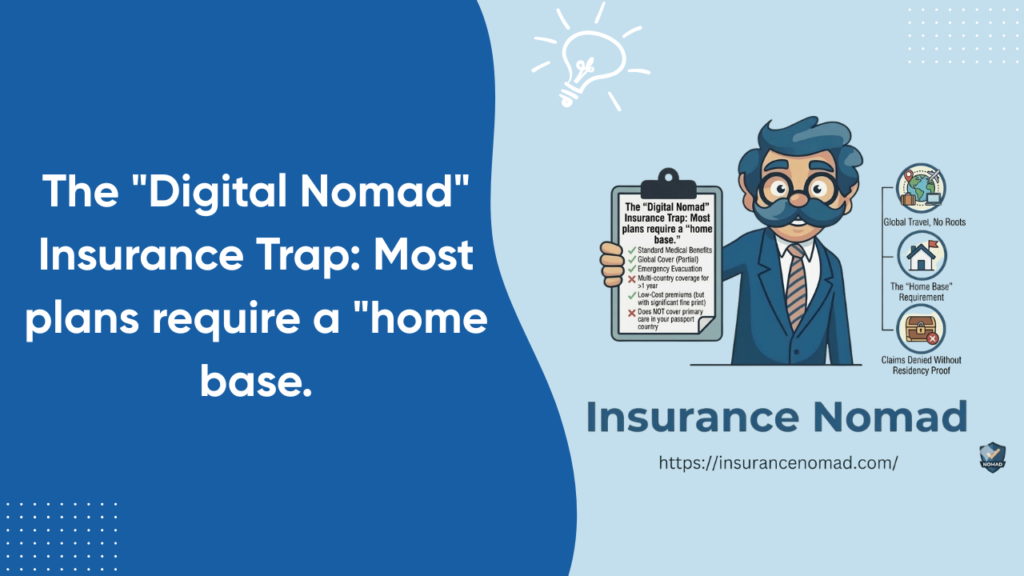
Living as a digital nomad sounds like freedom—working from anywhere, exploring new countries, and breaking away from traditional routines. But many travelers discover a hidden issue known as the digital nomad insurance trap.
The digital nomad insurance trap happens when insurance plans that seem flexible actually require a fixed “home base” or country of residence. If you don’t meet this requirement, your coverage may be limited—or even denied when you need it most.
Understanding the digital nomad insurance trap is essential before choosing a policy, especially if you plan to live abroad long-term.
What Is the Digital Nomad Insurance Trap?
The digital nomad insurance trap refers to a common issue where insurance policies marketed to travelers or remote workers include hidden conditions. One of the most important conditions is the requirement of a permanent home country.
Many people fall into the digital nomad insurance trap because they assume global coverage means they are protected everywhere without restrictions. In reality, insurers often need a legal residence for:
-
Policy registration
-
Claims processing
-
Legal jurisdiction
-
Coverage eligibility
If you don’t maintain a home base, you may unknowingly trigger the digital nomad insurance trap.

Why Do Insurance Plans Require a Home Base?
To understand the digital nomad insurance trap, it’s important to know why insurers enforce this rule.
Legal and Regulatory Reasons
Insurance companies must follow regulations based on a specific country. The digital nomad insurance trap exists partly because insurers need a legal framework tied to a home base.
Risk Assessment
A home country helps insurers evaluate risk levels. Without it, pricing and coverage become more complex, increasing the chances of falling into the digital nomad insurance trap.
Claims and Payments
Claims often depend on where you legally reside. Without a fixed address, processing claims becomes difficult—another reason the digital nomad insurance trap exists.

Common Scenarios Where the Digital Nomad Insurance Trap Happens
Many travelers don’t realize they’ve fallen into the digital nomad insurance trap until it’s too late.
Here are common situations:
-
Constantly moving between countries without residency
-
Using travel insurance as long-term health coverage
-
Not updating address or residency status
-
Assuming “worldwide coverage” has no restrictions
In each case, the digital nomad insurance trap can result in denied claims or limited benefits.

How to Avoid the Digital Nomad Insurance Trap
The good news is that you can avoid the digital nomad insurance trap with careful planning.
✅ Maintain a Legal Home Base
Even if you travel full-time, keeping a registered address can help you avoid the digital nomad insurance trap.
✅ Read Policy Terms Carefully
Always check for residency requirements before purchasing a plan to prevent the digital nomad insurance trap.
✅ Choose Specialized Nomad Insurance
Some providers offer plans designed specifically to avoid the digital nomad insurance trap, with more flexible residency rules.
✅ Keep Documentation Updated
Make sure your address, travel history, and policy details are accurate to reduce the risk of the digital nomad insurance trap.
You can also compare global coverage options on https://quotemaestro.com/ to find policies that reduce exposure to the digital nomad insurance trap.
Risks of Ignoring the Digital Nomad Insurance Trap
Ignoring the digital nomad insurance trap can lead to serious consequences:
-
Claim denials
-
Unexpected out-of-pocket medical costs
-
Limited emergency coverage
-
Legal complications with insurers
Understanding the digital nomad insurance trap helps you avoid these risks and travel with confidence.
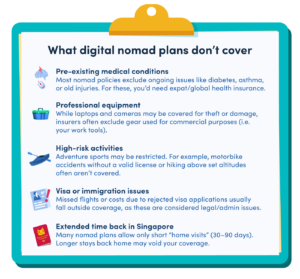
Real-Life Example of the Digital Nomad Insurance Trap
Imagine a remote worker traveling across Asia and Europe for a year without maintaining a home address. They purchase a travel insurance plan with “global coverage.”
When they file a claim, the insurer asks for proof of residency. Since they cannot provide a valid home base, the claim is denied—this is a classic digital nomad insurance trap.
Who Is Most Affected by the Digital Nomad Insurance Trap?
The digital nomad insurance trap most commonly affects:
-
Freelancers working remotely
-
Long-term travelers
-
Expats without fixed residency
-
Remote employees relocating frequently
If you fall into one of these categories, understanding the digital nomad insurance trap is crucial.
FAQs: Digital Nomad Insurance Trap
❓ What is the digital nomad insurance trap?
The digital nomad insurance trap occurs when insurance policies require a home base, leading to denied claims if you don’t meet residency requirements.
❓ Why do insurers require a home base?
The digital nomad insurance trap exists because insurers need legal, regulatory, and risk assessment frameworks tied to a country.
❓ Can I get insurance without a home base?
Some specialized plans reduce the digital nomad insurance trap, but most still require some form of residency.
❓ Where can I compare nomad-friendly insurance plans?
You can explore flexible coverage options and avoid the digital nomad insurance trap by visiting https://quotemaestro.com/.
Final Thoughts on the Digital Nomad Insurance Trap
The digital nomad insurance trap is one of the most overlooked risks for remote workers and long-term travelers. While the lifestyle offers freedom, insurance policies often come with hidden requirements that can create serious problems.
By understanding the digital nomad insurance trap, reading policy details carefully, and choosing the right plan, you can protect yourself from unexpected coverage issues and enjoy your travels with peace of mind.