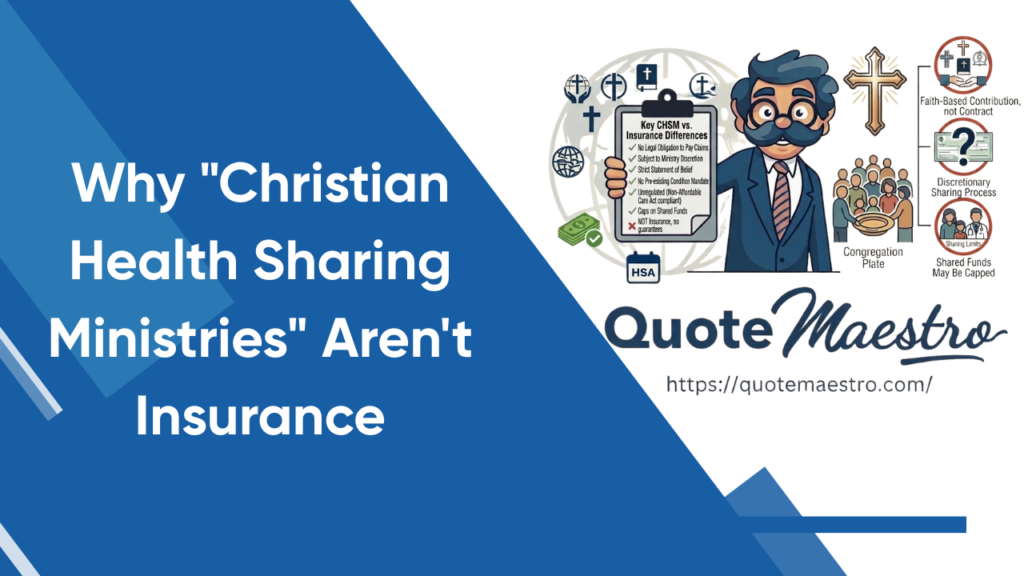
Many people searching for affordable healthcare come across health sharing plans and assume they work just like traditional insurance. While they can look similar on the surface, the reality is quite different.
Programs like Medi-Share and Samaritan Ministries are examples of health sharing plans that operate outside the traditional insurance system.
Understanding how health sharing plans work can help you avoid costly misunderstandings.
What Are Health Sharing Plans?
Health sharing plans are community-based programs where members contribute monthly funds to help cover each other’s medical expenses.
Unlike insurance, health sharing plans are not legally required to pay claims. Instead, they rely on voluntary participation and shared responsibility.
Key features of health sharing plans include:
- Monthly member contributions
- Faith-based or community guidelines
- Limited regulatory oversight
- No contractual guarantee of payment
How Health Sharing Plans Work
To understand health sharing plans, it’s important to know how the process works:
- Members pay a monthly share amount
- Medical expenses are submitted for review
- Eligible costs are shared among members
Because health sharing plans are not insurance, payments depend on program rules rather than legal obligations.

Key Differences Between Health Sharing Plans and Insurance
1. Legal Protection
Traditional insurance guarantees coverage. Health sharing plans do not offer the same level of legal protection.
2. Coverage Scope
Insurance must meet strict coverage standards, while health sharing plans may exclude certain treatments.
3. Pre-Existing Conditions
Many health sharing plans have limitations on pre-existing conditions.
4. Claim Reliability
Insurance follows regulated processes. Health sharing plans rely on community participation.
Benefits of Health Sharing Plans
Despite limitations, health sharing plans offer some advantages:
✅ Lower Monthly Costs
Many people choose health sharing plans because they are more affordable.
✅ Community Support
Members often value the shared, faith-based approach of health sharing plans.
✅ Simpler Structure
Compared to complex policies, health sharing plans can feel easier to understand.
Risks of Health Sharing Plans
Before joining, it’s important to understand the risks of health sharing plans:
- No guaranteed payment of claims
- Limited coverage for certain treatments
- Less consumer protection
- Financial uncertainty in major emergencies
These risks highlight why careful evaluation of health sharing plans is essential.
Who Should Consider Health Sharing Plans?
Health sharing plans may work for:
- Healthy individuals with low medical needs
- People looking for lower monthly costs
- Those comfortable with community-based systems
However, they may not be suitable for those needing comprehensive coverage.
Alternatives to Health Sharing Plans
If you’re unsure about health sharing plans, consider:
- Marketplace insurance
- Employer-sponsored plans
- Short-term coverage options
You can compare plans and explore better alternatives on https://quotemaestro.com/ to find what fits your needs beyond health sharing plans.
Common Misconceptions About Health Sharing Plans
❌ “They are the same as insurance”
Not true—health sharing plans operate very differently.
❌ “All medical costs are covered”
Coverage depends on program rules.
❌ “They are fully regulated”
Most health sharing plans have limited oversight.

FAQs: Health Sharing Plans
❓ What are health sharing plans?
Health sharing plans are programs where members share medical expenses instead of using traditional insurance.
❓ Are health sharing plans reliable?
They can work in some cases, but health sharing plans do not guarantee payment.
❓ Why are they cheaper?
Lower costs reflect fewer protections in health sharing plans.
❓ Where can I compare insurance options?
Visit https://quotemaestro.com/ to explore alternatives to health sharing plans.
Final Thoughts on Health Sharing Plans
Health sharing plans can be a useful option for certain individuals, but they are not a replacement for traditional insurance. Understanding the differences, risks, and benefits is key to making the right decision.
By doing proper research and comparing options, you can decide whether health sharing plans fit your financial and healthcare needs.