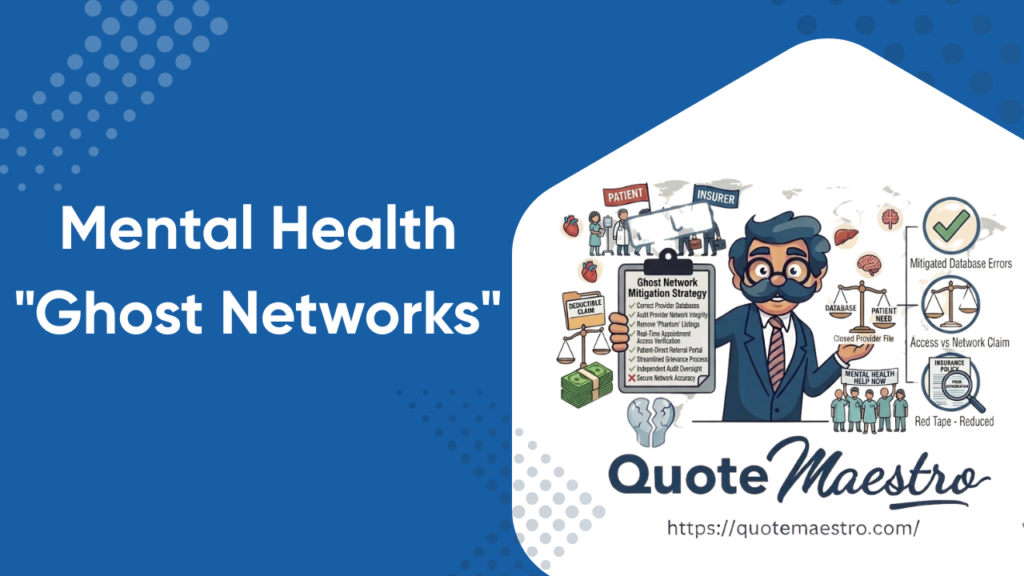
The term Mental Health Ghost Networks might sound strange, but for many patients, it’s a frustrating reality.
Imagine paying for health insurance, searching for a therapist in your network, calling multiple providers—and finding out they’re unavailable, not accepting new patients, or not even in-network anymore. That’s exactly what Mental Health Ghost Networks are.
These outdated or inaccurate provider directories create the illusion of access while leaving patients without real care.
What Are Mental Health Ghost Networks?
Mental Health Ghost Networks refer to health insurance provider lists that include mental health professionals who are:
- No longer practicing
- Not accepting new patients
- Incorrectly listed as in-network
- Unreachable or outdated
On paper, your insurance plan may look like it offers dozens of mental health providers. In reality, very few may actually be available.
This disconnect is the core issue behind Mental Health Ghost Networks.

Why Mental Health Ghost Networks Are a Growing Problem
The rise of Mental Health Ghost Networks is tied to increased demand for mental health services and outdated insurance systems.
Here’s why the problem is getting worse:
- More people are seeking therapy and psychiatric care
- Provider directories aren’t updated regularly
- Insurers struggle to maintain accurate listings
- Many providers limit insurance-based patients
As demand increases and systems fail to keep up, Mental Health Ghost Networks continue to expand.

How Mental Health Ghost Networks Impact Patients
The effects of Mental Health Ghost Networks go far beyond inconvenience—they can delay or completely block access to care.
Patients often experience:
- Weeks or months of delays in finding help
- Increased out-of-pocket costs for out-of-network care
- Frustration and burnout from repeated calls
- Worsening mental health conditions
In urgent situations, these delays can be especially harmful. That’s why Mental Health Ghost Networks are becoming a major concern in the healthcare system.

Why Insurance Companies Struggle with Mental Health Ghost Networks
Insurance companies don’t intentionally create Mental Health Ghost Networks, but several factors contribute to the issue:
- Providers frequently change availability
- Data updates are slow and inconsistent
- Networks are built for scale, not accuracy
- Reimbursement rates discourage provider participation
These challenges make it difficult to maintain reliable directories, fueling the ongoing problem of Mental Health Ghost Networks.

What This Means for Your Health Insurance Plan
If you rely on mental health coverage, Mental Health Ghost Networks can significantly affect your experience.
You might think your plan offers strong coverage—only to discover limited real access.
When reviewing plans, it’s important to look beyond provider counts. You can also explore trusted resources like https://quotemaestro.com/ to compare insurance options and better understand network reliability.
Being informed can help you avoid the pitfalls of Mental Health Ghost Networks.
How to Navigate Mental Health Ghost Networks
While you can’t completely avoid Mental Health Ghost Networks, you can take steps to reduce their impact:
- Call providers directly to confirm availability
- Ask your insurer for updated or verified lists
- Request case management assistance
- Consider telehealth options for broader access
Taking a proactive approach can make a big difference when dealing with Mental Health Ghost Networks.
Are There Solutions to Mental Health Ghost Networks?
The healthcare industry is starting to address Mental Health Ghost Networks, but progress is slow.
Potential solutions include:
- Stricter regulations on directory accuracy
- Real-time provider availability updates
- Expanded telehealth networks
- Better incentives for mental health providers
Until these changes become widespread, Mental Health Ghost Networks will likely remain a challenge.
Final Thoughts on Mental Health Ghost Networks
Mental Health Ghost Networks highlight a deeper issue in health insurance: access doesn’t always match what’s promised on paper.
For patients, it means doing extra work to find care.
For insurers, it’s a system that needs improvement.
For the healthcare industry, it’s a problem that can’t be ignored.
Understanding Mental Health Ghost Networks can help you make smarter decisions and advocate for better care.
❓ FAQs About Mental Health Ghost Networks
What are Mental Health Ghost Networks?
Mental Health Ghost Networks are inaccurate insurance provider directories that list unavailable or incorrect mental health professionals.
Why do Mental Health Ghost Networks exist?
They exist due to outdated data, high demand for care, and challenges in maintaining accurate provider information.
How do Mental Health Ghost Networks affect patients?
They delay access to care, increase frustration, and may lead to higher out-of-pocket costs.
Can Mental Health Ghost Networks be fixed?
Yes, but it requires better regulation, improved technology, and stronger provider participation in insurance networks.